In the Land of Liberty
The real history of a fake Cliff Dwelling.
· 7 min read
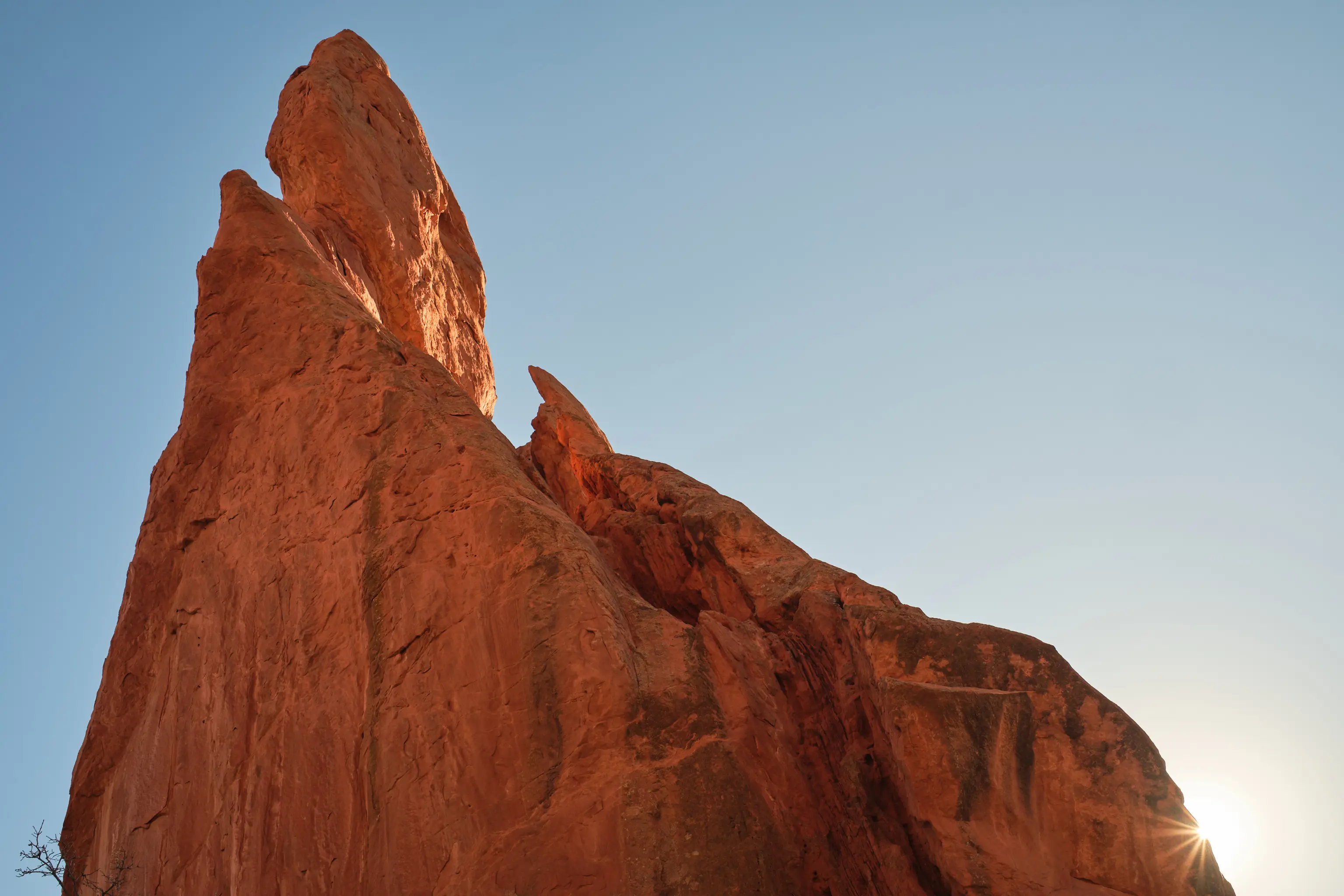
Sunset in Garden of the Gods, 2024
A south-west styled sign off of Buffalo Soldiers Memorial Highway 1 (US-24) advertises the Manitou Cliff Dwellings. I have a faint memory of visiting the place with my Grandpa and my Mom when I was younger. I could remember scraps of narrative: an Indigenous people who ‘disappeared,’ tiny doorways, and a gift shop with drums for sale. When I asked my mom about the trip she said she remembered feeling uncomfortable.
“Back then I didn’t know as much (as now), but I still remember thinking there were a lot of stereotypes. Grandpa was really excited to take (my siblings and I) there but (my brother) was having a hard time so we stayed in the gift shop.” My sister added: “I remember it being very sus, even as a child. Our parents never brought us back.”
I heard this story this a trip to Colorado Springs. After my Grandfathers passing earlier this year, my family and I are visiting his properties to clean out furniture and say goodbye. On the way to his log home in the mountains, my partner saw the sign for Manitou Cliff Dwellings and wanted to visit. As a US History, AP African American and Ethnic Studies teacher, she is well versed in the settler logics embedded in American History. When we visited the nearby Garden of the Gods city park, she quickly picked out the settler narratives in the visitors center and commented on the massive plaque cut into the face of the rocks. The plaque celebrates Charles Elliott Perkins and his gift of a “forever free to the public” park in the city of Colorado Springs. High praise indeed.
When I got home and did some [digging and lateral reading2. The “official” narrative comes from the “Garden of the Gods Park History.”
It all begins in the Pleistocene Ice Age, which resulted in the erosion and glaciation of the rock, creating the present rock formations…
… In August of 1859, two surveyors started out from Denver City to begin a townsite, soon to be called Colorado City. While exploring nearby locations, they came upon a beautiful area of sandstone formations…
The narrative jumps from the Ice Ages to white colonial settlers to the Perkins, a railroad baron and owner of the Chicago, Burlington and Quincy Railroad.3
Suspiciously absent from the narrative are Indigenous people. This absence extends to my memory of the Manitou Cliff Dwellings. In 8th grade history class in Colorado’s public schools, my mom learned about the “Anasazi” people who lived in Colorado and mysteriously disappeared. This narrative of erasure was passed into my subconscious and was reawakened any time I thought about the Cliff Dwellings in Colorado.
Yet, this narrative is more than just a narrative of erasure. It is a narrative of imperial expansion and genocide. One of the numerous contradictions of American empire is encapsulated in a informational poster in the visitors center at the summit of Pikes Peak. Across from a station with indigenous oral histories reads “Empire of Liberty” which tells the story of Spanish Colonization to the famous song “America The Beautiful”
Written from a vista at Pikes Peak, part the original poem reads:
A thoroughfare for freedom beat
Across the wilderness!
America! America!
I see the liberty in the house outside of the Garden of the Gods with American and Israeli Flags as Israel & American contractors commit mass bombings at aid sites, cruelly calculated starvation and genocide. I hear the liberty in the use imposition of the Navajo word “Anasazi” which means “ancient enemy” to describe ancestors. I remember the liberty of my brother’s ‘drums,’ complete with a ‘made in china sticker’ made of cheap wood and rubber bought at the Manitou ‘Cliff Dwellings’ at our visit those many years ago. I can sense the freedom emanating from the North American Aerospace Defense Command radio signals piercing the stone of Cheyenne Mountain. I paid for freedom, $80 to be exact, for an America ‘The Beautiful Annual Pass’ to the National Parks.
The Manitou Springs ‘Cliff Dwellings’ are not cliff dwellings at all. They are the looted remains of the Ancestral Puebloan people reconstructed into the power fantasy of ‘freedom’ lovers. As soon as the settlers stole great Indigenous civilizations land through treacherous treaties, infected blankets and wholesale slaughter, their focus turned to more humanitarian concerns. Protecting pristine ‘wilderness’ lands (from whom?) and preserving the ’native’ legacy (for whom?). To create the ‘Cliff Dwellings’ White looters stole bricks and artifacts from a freestanding Pueblo above Montezuma Valley in southern Colorado to construct a replica of Mesa Verde’s long house. The reconstruction was to be tourist attraction for wealthy travelers who wanted a taste of wilderness exploration in the Pikes Peak Area. The myth of humanitarianism and ‘preservation’ was the banner under which Virginia McClurg and Lucy Peabody, empowered by an early women’s suffrage movement in Colorado, used to successfully lobby to transfer Mesa Verde from the jurisdiction of the Ute Reservation to the United States Federal Government. McClurg, was disappointed by federal control, became a “stockholder in the Manitou Cliff Dwellings Museum and Preserve scheme” within months.
All of our national parks are built on stolen land,” says Norton, the [Colorado] state archaeologist, “but Mesa Verde, that land was stolen twice.”
The US government confined the Weeminuche, formerly living across the Rocky Mountains, to an arid corner of Southwest Colorado. Soon after the establishment of Mesa Verde, the Parks Department realized that the Weeminuche (Ute) still controlled some of the cliff dwellings on Reservation land. Although the Ute Mountain leaders resisted US government takeover, the federal negotiators used the legal precedent of Lone v Hitchock (1903) to assert Indigenous peoples were wards of the United States and hold the land hostage.
The Settlers desire the ‘freedom’ to conquer and pillage and take. They desire ‘freedom’ of movement across enemy territory first by Rail and now by F-35.
At times this ‘freedom’ is interrupted by Indigenous resistance. My partner was quick to point out the mythological history of Pikes Peak and Garden of the Gods as we visited. Her commitment to the truth inspired me to laterally read the narratives of Manitou Springs, Pikes Peak and Mesa Verde. The real story of Manitou Springs ‘Cliff Dwellings’ printed in High Country News (and to a lesser extent by colorado public radio) was made visible by Raven Payment’s (Kanien’kehá:ka and Anishinaabe) viral twitter exposé. Although the US government maintains control of much of the land in Mesa Verde, some dwellings remain under Ute jurisdiction in Ute Mountain Ute Tribal Park.
Resistance also continues at the point of land grabbing. Despite surveillance, people continue to resist the development of Lithium Mines for EVs desecrating a burial site in Nevada’s Thacker Pass. In Palestine, the resistance movements continue to use the unexploded genocide bombs against the Israeli Occupation Forces.
Rather than visiting the so called ‘cliff dwellings’ in Manitou springs, I will be donating the entrance fee to Haseya, a “Native woman-led and operated organization that serves Indigneous [sic] survivors of domestic and sexual violence in the Colorado Springs region.” In addition to the signs listed at Garden of the Gods and around Manitou springs, I encourage you to read Haseya’s area history statement.
Next week, I will travel through the US southwest visiting Mesa Verde, Zion and Vegas passing through the ancestral territory of the Ute, Navajo, Apache, Northfolk Mono and more. I am also making a point to stop in Navajo Nation, Ute Mountain Ute Tribal Park and Manzanar Internment Camp and other places to learn the real rather than settler histories.
-
More on ‘Buffalo Soldiers’ and how Black people are conscripted into settler colonialism is available in An Indigenous People’s History of the United States: Chapter 8 - “Indian Country” ↩︎
-
Lateral Reading is a skill I teach my students in World History. In short, always check your sources online and read multiple narratives of history. I would also add, focus on and bias towards Peopple’s history. ↩︎
-
For more on Railroad Tycoons & ‘Yankee Imperialism’ listen to this Episode of the Anti-Empire Project’s Civilizations Series on the Robber Barons. ↩︎